
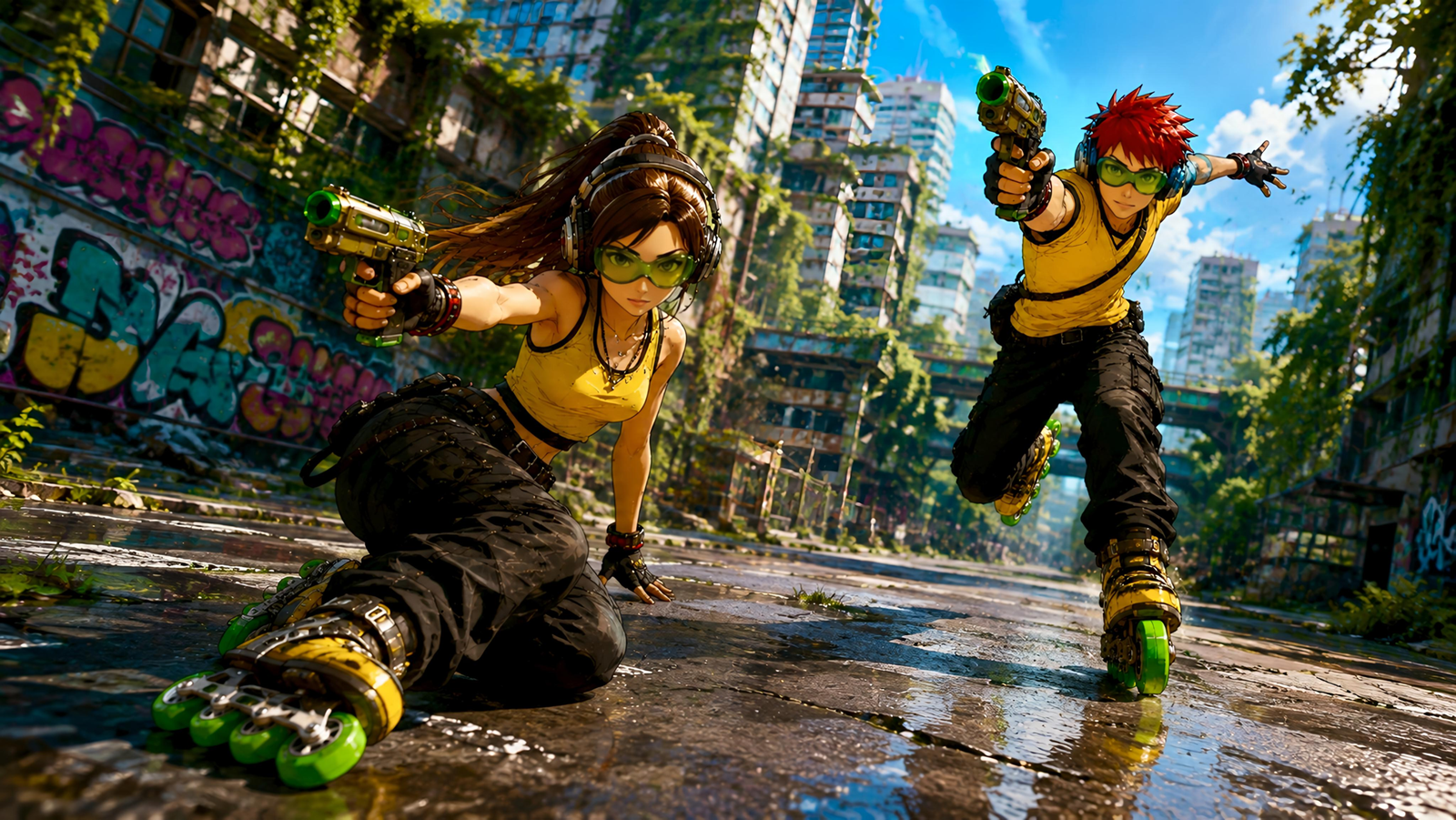
There are some video game franchises that disappear for years but never really leave the conversation.
Jet Set Radio is one of them.
SEGA’s colorful combination of skating, graffiti, music and rebellious street culture became a cult favorite after its original release. Now, after years without a new mainline entry, the series is officially on its way back.
SEGA announced in December 2023 that a new Jet Set Radio game was in development, alongside new projects based on Crazy Taxi, Golden Axe, Shinobi and Streets of Rage. SEGA described these projects as modern reimaginings of its legacy franchises.
And the project is still alive.
SEGA’s latest financial-year roadmap, released in 2026, continues to list Jet Set Radio among its upcoming full-game projects, although the company has not announced a final title or release date yet.
So, after all these years, the question isn’t really whether Jet Set Radio is coming back.
It’s what SEGA is going to do with it.
A Forgotten Classic Is Getting Another Run
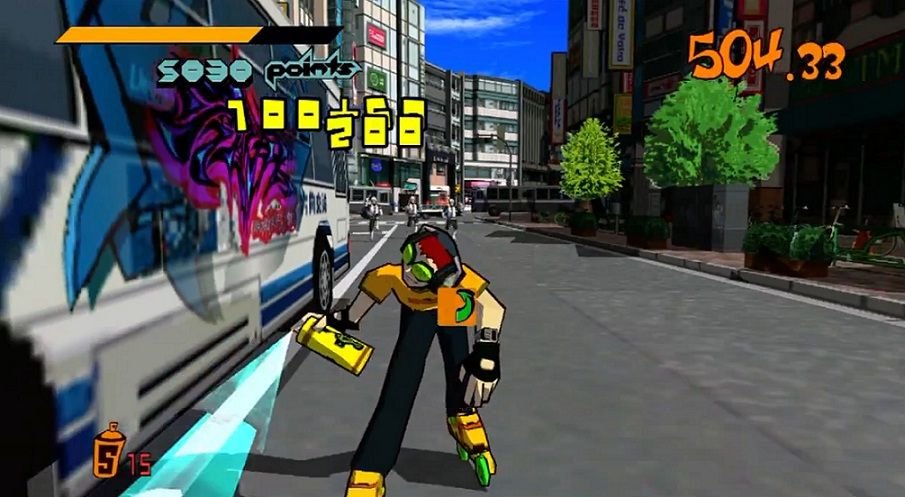
The original Jet Set Radio stood out because it didn’t feel like a conventional action game.
Instead of presenting players with another serious military campaign or fantasy adventure, it built its identity around a strange mixture of:
• inline skating
• graffiti
• urban exploration
• music
• exaggerated characters
• colorful environment
• srebellious street culture
That combination gave the franchise an identity almost impossible to confuse with anything else.
The new project has the difficult job of preserving that personality while making the experience feel appropriate for modern hardware.
SEGA’s own announcement says the new titles are being developed to reimagine its classic franchises for modern audiences.
That distinction matters.
This isn’t simply about putting higher-resolution textures on an old game.
The Real Challenge: Modernizing Jet Set Radio Without Losing Its Soul
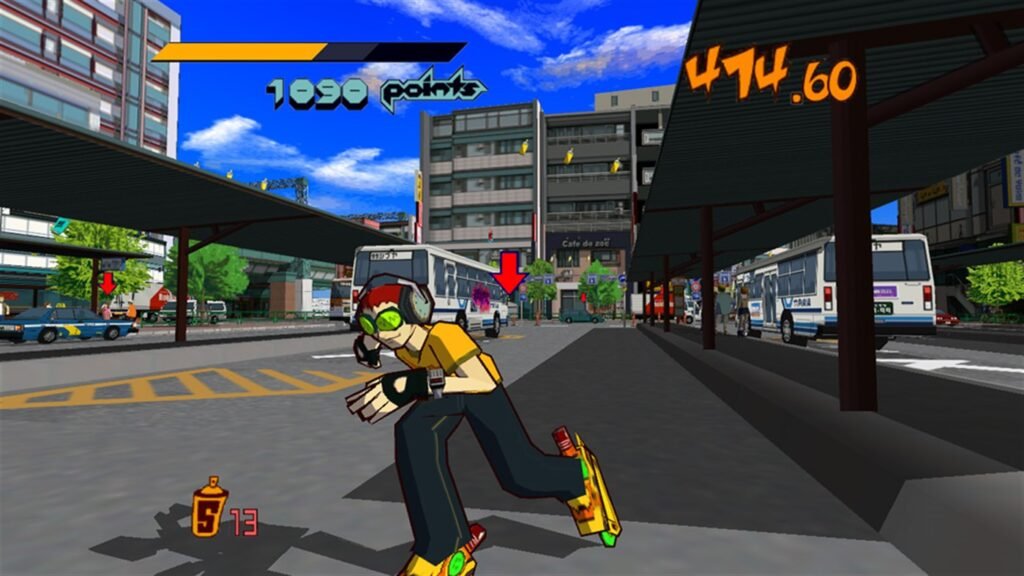
The biggest danger with a Jet Set Radio reboot isn’t outdated technology.
It’s over-modernization.
The original games were memorable partly because of their unusual visual identity and arcade-like movement.
A modern version could easily become too realistic, too serious or too dependent on conventional open-world mechanics.
That would miss the point.
A successful Jet Set Radio reboot should still feel like a moving piece of graffiti artwork.
Bright colors.
Aggressive music.Stylized characters.
Huge skating routes.
Impossible-looking tricks.
And a city that feels designed around movement rather than simply acting as a backdrop.
Skating Could Become the Heart of the New Game
Movement will probably be one of the most important parts of the reboot.
The player shouldn’t simply walk around a city and occasionally use skates.
The city itself should be built around skating.
Imagine jumping between rooftops, grinding along rails, sliding down handrails and discovering hidden shortcuts while moving through dense urban neighborhoods.
The best version of this idea would make exploration feel almost like a continuous trick sequence.
Instead of:
Walk → mission → fight → cutscene
the game could encourage:
Skate → discover → tag → escape → grind → shortcut → mission
That would immediately distinguish the game from conventional open-world adventures.
Music Has to Be a Major Part of the Comeback
There is another element SEGA cannot afford to underestimate:
the soundtrack.
Music was never just background noise in Jet Set Radio.
It was part of the game’s personality.
A modern reboot therefore needs an equally distinctive musical identity.
Rather than simply recreating the old soundtrack, SEGA could potentially combine returning musical styles with new artists and genres.
The goal shouldn’t be to make the game sound like 2000 again.
It should sound like Jet Set Radio in the 2020s.
That means finding artists capable of creating the same rebellious, energetic atmosphere for a new generation.
Tokyo-to Could Feel Completely Different on Modern Hardware
The city could also receive a dramatic upgrade.
Modern hardware allows developers to create much denser environments than the original games could manage.
A reboot could feature:
Rooftop routes
Players could use buildings as alternative paths instead of treating them as scenery.
Underground areas
Subway tunnels and maintenance passages could become hidden skating routes.
Dynamic crowds
Busy streets could react to the player’s movement and graffiti activity.
Interactive environments
Railings, walls, signs and other structures could become part of the movement system.
Vertical exploration
Buildings could become traversal puzzles rather than simple decorative objects.
The important thing is that the environment should encourage experimentation.
More – Agent 47 Isn’t Done Yet — Hitman 4 Could Be the Assassin’s Next Big Mission
Graffiti Could Become Much More Detailed
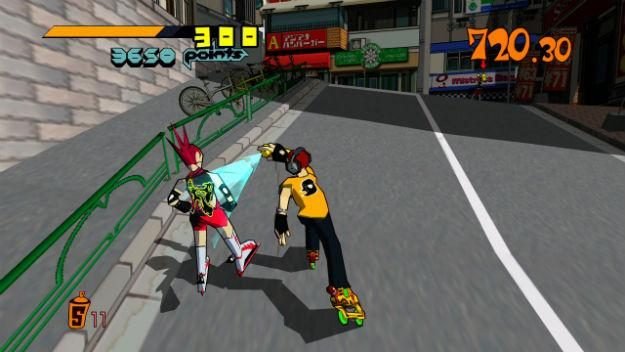
Graffiti is obviously another major component.
A modern game could expand the original tagging concept considerably.
Players could potentially:
• create custom tags
• unlock new designs
• discover hidden graffiti locations
• compete with rival crews
• reclaim territory
• customize their skating gear
• build a personal visual style
This could give players a reason to explore every corner of the city.
Instead of graffiti being something that simply appears during missions, it could become part of the game’s progression system.
The Reboot Could Also Expand the Rival Crews
The original concept naturally lends itself to competing groups.
A modern story could introduce multiple skating crews, each with its own:
music → clothing → graffiti style → territory → characters
That would make the city feel like a collection of competing subcultures rather than one giant map.
It could also give SEGA a way to introduce new characters without abandoning the franchise’s recognizable identity.
Beat Still Has a Huge Role in the Franchise’s Identity
For many players, Beat is inseparable from Jet Set Radio.
SEGA has continued to use the character even during the franchise’s long absence. In 2024, Beat appeared as a playable character in Super Monkey Ball Banana Rumble as part of the SEGA Pass.
That doesn’t confirm exactly how the character will be used in the upcoming game.
But it does demonstrate that SEGA continues to recognize Beat as an important part of the franchise’s identity.
A modern reboot will naturally face one major question:
How much of the original cast should return?
SEGA Is Clearly Betting on Its Legacy Again
Jet Set Radio isn’t returning in isolation.
SEGA’s current strategy includes multiple revivals of older franchises. Its official 2023 announcement included Crazy Taxi, Golden Axe, Jet Set Radio, Shinobi and Streets of Rage.
The company’s 2026 roadmap continues to list Jet Set Radio, Crazy Taxi, Golden Axe and Streets of Rage among its upcoming projects.
That makes the Jet Set Radio project part of a much larger attempt by SEGA to bring recognizable legacy brands back to modern audiences.
Why This Reboot Could Be Different From Most Remakes
Most remakes have one obvious selling point:
better graphics.
Jet Set Radio has an opportunity to do something more interesting.The technology can improve everything around the original formula without changing its core identity.
Imagine:
A living city.
A completely seamless skating system.
More vertical routes.
Modern graffiti mechanics.
A new soundtrack.A larger cast.
More expressive animation.
A story built around rival crews.
If SEGA gets those pieces right, the reboot could feel less like a nostalgic remake and more like a genuine continuation of the idea behind Jet Set Radio.
The Big Question for SEGA
The question isn’t whether people remember Jet Set Radio.
They clearly do.
The question is whether SEGA understands why people remember it.
The answer isn’t simply:
“Because it had graffiti.”
It was the combination of movement, music, art direction, attitude and freedom.
Remove those elements and the franchise becomes just another skating game.
Keep them—and modernize them intelligently—and SEGA could have something genuinely distinctive.
Final Verdict
The Jet Set Radio reboot is real in the sense that SEGA has officially confirmed a new Jet Set Radio game is in development, and the project remains on SEGA’s latest roadmap.
What remains unknown is almost everything surrounding the final product.
We don’t have a confirmed release date.
We don’t have the final title.
We don’t have the complete gameplay details.
And we don’t yet know exactly how far SEGA will take its reimagining of the classic formula.
But after years of silence, one thing is finally clear:
Jet Set Radio isn’t stuck in the past anymore.
SEGA is giving the franchise another shot.
Now it has to prove that the world’s most stylish graffiti crew can still own the streets.